Love Without The Flesh
There are topics one rarely speaks of in public, not because of shame, but because their meaning resists simplification. This is one of them. A conversation with a close friend recently drew me into unexpected reflection. We were two women in our twenties, both ambitious, both searching for meaning, yet standing at opposite edges of the same question: what does intimacy truly require? She spoke with ease about her experiences, the freedom of exploration, the exhilaration of passion, the confidence of owning one’s body. I listened, not in judgement, but in contemplation, for my relationship with intimacy had taken a different turn.
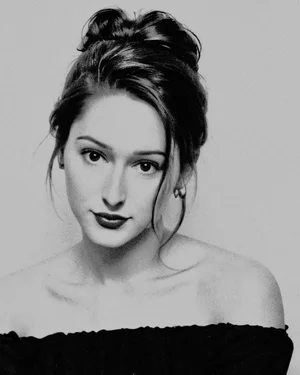
Some time ago, I chose to step back from physical relationships. It was not a decision of faith or fear, but of inquiry. I wanted to understand love stripped of the distractions of the body, to test whether connection could exist when desire was not immediately gratified. What began as an experiment became something profound: a reorientation of how I understand love, connection, and human dignity.
Where once I might have viewed this decision as deprivation, I have come to see it as initiation into a deeper form of intimacy. In law, there is a concept known as privation revealing value, the idea that we only recognise the worth of something once it has been removed. That legal principle became, for me, a mirror of experience. The absence of the familiar has clarified what is enduring: affection that rests on intellect, virtue, and the meeting of minds. The absence of the physical has not erased desire; it has refined it.
Our culture teaches that fulfilment is found in sensation, that love is validated through physical confirmation. To exist outside that framework is to feel, at first, exiled from modern womanhood. But philosophy, theology, and psychology all offer a counter narrative. Plato described eros as a ladder: desire begins with the body but ascends toward truth and beauty. Augustine called love a movement of the soul, the longing of creation for its Creator. For both, the physical is not the end of love, but its introduction. When the body’s avenues are set aside, the heart and mind must find new routes toward communion.
My friend, liberated in her experience, spoke of her freedom with sincerity. Yet beneath her laughter lay a kind of exhaustion, the ache of being desired but not seen. Her experiences, so different from mine, mirrored my own realisation from the opposite direction: that the body alone cannot carry the full weight of intimacy. She has known love’s abundance; I have known its restraint. Yet both of us, in our own ways, have learned that connection without meaning leaves one hungry for something purer.
I began to approach love as a form of jurisprudence, a discipline of discernment. In law, the validity of a contract depends not on appearance, but on substance: mutual consent, good faith, and intention. I began to see relationships through the same lens. What binds two people is not performance but integrity, not impulse but alignment. The absence of the physical forced me to test the emotional and moral architecture of connection more rigorously. Attraction, when stripped of its usual expression, must either deepen into companionship or dissolve into illusion.
Psychology reinforces this truth. Attachment theory reminds us that the foundation of love lies in attunement, the capacity to be seen, known, and emotionally understood. The body can express affection, but it cannot fabricate empathy. Affection without attunement leaves emptiness where intimacy should be. In my case, the choice to refrain from physical intimacy revealed that connection can exist entirely in the space between minds: in conversation, in shared pursuits, in the subtle exchange of care that asks for nothing but presence.
There were times, of course, when I grieved. To be human is to long for touch, to ache for what others take for granted. But grief, I found, can become the soil of transformation. Kierkegaard wrote that suffering is education in disguise, that through limitation, we learn the contours of our own soul. My limitation is not physical, but chosen, a boundary that disciplines me into self-possession. Where I once sought affirmation through attraction, I now seek understanding through depth. What I do not offer physically, I offer wholly in character, intellect, and loyalty.
Philosophically, I have come to view this transformation as a reordering of eros itself. The erotic, at its core, is not merely sexual; it is the yearning for union with truth, with beauty, with the divine. When deprived of one form of expression, eros finds another. It becomes the energy that drives compassion, creativity, and devotion. I now understand chastity not as repression, but as coherence, a unity between mind, soul, and body, even when the body remains at rest.
When my friend and I speak now, our conversations are gentler, more curious than before. She has shared how the abundance of experience can dull sensitivity, how freedom without discernment can become another kind of bondage. I have shared how restraint can become a kind of wisdom, forcing one to cultivate other dimensions of love: patience, conversation, moral resonance. She has come to see that pleasure can lose meaning without sanctity; I have come to see that sanctity does not require denial of joy. We are, in different ways, learning the same truth: that love matures when it stops being about what it can take and begins being about what it can reveal.
Faith, too, reshaped my understanding. In theology, divine communion is entirely non-physical, a union of will, not flesh. The greatest intimacy known to humanity is spiritual, not sensual. This truth, once abstract to me, has become concrete. My prayers, my friendships, my intellectual collaborations have all deepened since I began this exploration. Love has become something purer, no longer contingent on ability or form, but grounded in reverence.
Law taught me to reason, philosophy taught me to question, and faith taught me to surrender. Together, they have shown me that human worth does not depend on function. The world celebrates what can be displayed, yet true power often resides in what cannot be performed. To love without possession, to be desired for one’s mind and soul rather than one’s body, is a privilege I once would have overlooked. Now, it feels like a rare form of freedom, the kind that does not need to prove itself.
I have also come to understand grace in a more tangible way. Grace is not sentimentality; it is the posture of acceptance that transforms restraint into wisdom. What once felt like exclusion from ordinary womanhood has become an invitation to extraordinary clarity. I see now that purity, in its most authentic form, is not about abstaining from sin but about aligning with truth. My story is not one of loss, but of redefinition.
When I look back on that evening with my friend, I no longer see contrast but complementarity. Her journey and mine, though opposite in form, are united in purpose, each seeking authenticity, each yearning to love rightly. She continues her exploration of the body; I, the spirit. Yet we both aspire to the same virtue: to love with integrity.
The body, after all, was never meant to be the full language of love, only its first dialect. What endures is not the act, but the essence behind it. Love that survives without physical confirmation is not diminished; it is distilled. It reveals what remains when everything else is taken: the will to understand, the courage to give, the humility to receive.
I once thought my life would be defined by what I had set aside. Now I see it is defined by what I have come to comprehend. To love in restraint is not to be unworthy of love itself, but to be called to a different kind of intimacy, one that endures precisely because it transcends desire. The world might call it absence. I call it law, the divine kind, written not in code but in the quiet transformation of the heart.
Please note that while this content was published by the Civiel editorial team, this is narrated via the perspective of our founder & creative director, Callie M. Alaina Orford.